Coding, Marking, and Labeling Glossary of Terms

A

  • Applications

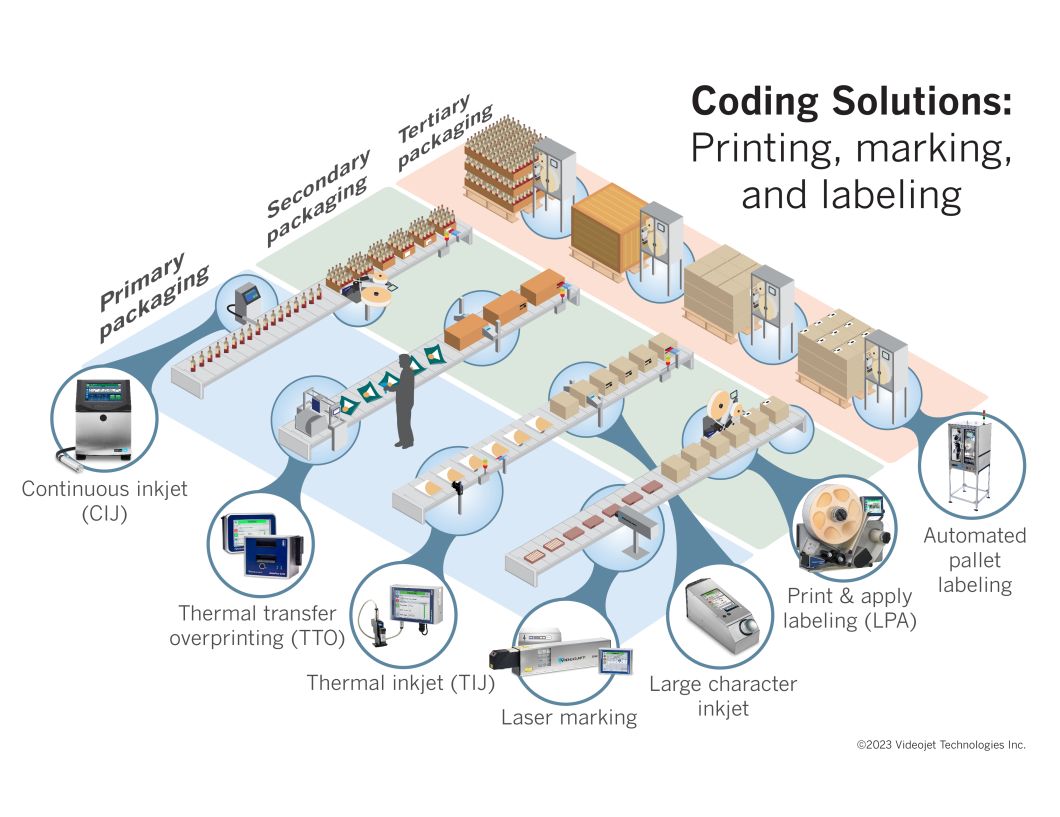
    In industrial marking and coding, an application refers to the specific set of conditions under which a product or package must be marked. This includes factors such as the production environment (e.g., temperature, humidity, cleanliness), product or packaging shape and size, substrate material (e.g., plastic, glass, metal), line speed, and the type of code or information required (e.g., date codes, barcodes, logos). Understanding the application is essential for selecting the appropriate coding technology to help ensure reliable, legible, and compliant marks.

B

  • Bag Packaging

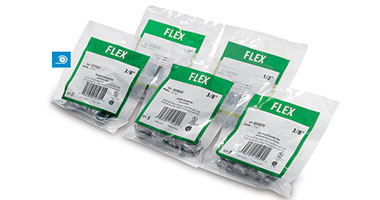
    Packaging solution using bags to contain and protect products, commonly used for food, powders, and small parts.

  • Bagging Machines

    Bagging machines automate the dosing and packaging of products like pharmaceuticals, cosmetics, food, and even hardware into sealed composite film bags. They streamline the filling and sealing process for a wide range of products.

  • Barcode

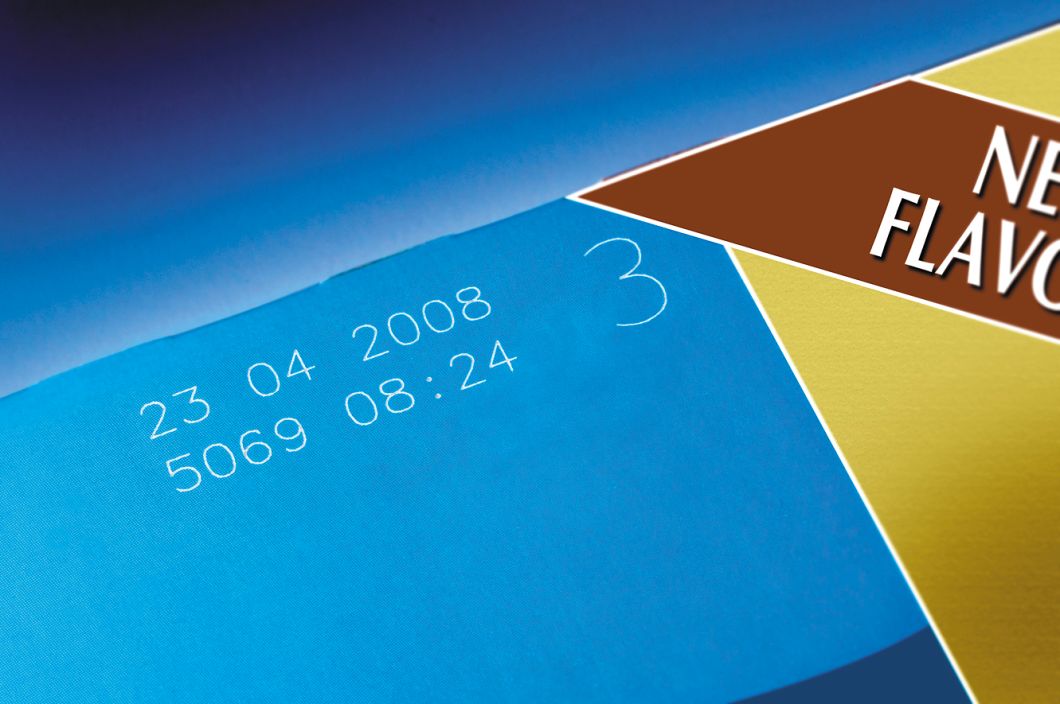
    A barcode (sometimes called bar code) is a machine-readable, numerical code represented by lines or bars that stores product information such as expiry date, batch number, and processing date, enabling efficient traceability and data retrieval through optical readers. It can be printed in linear (1D) or two-dimensional (2D) formats, with 2D codes offering higher data storage capacity.

  • Barcode Label Printers

    Devices that print barcodes onto adhesive labels for application on products, packaging, or pallets, enabling inventory and tracking systems.

  • Batch Coding Machine

    Equipment that prints batch numbers on products for tracking and traceability, essential in manufacturing and distribution.

  • Batch Number

    An identifier assigned to a group of products made together, used to trace production history and manage recalls.

  • Best before date stamp machine

    Equipment used to apply best-before dates on packaging, helping ensure consumers are aware of product freshness.

  • Blister Packaging

    A packaging method using pre-formed plastic and backing material, often used for small items like pharmaceuticals.

  • Bottle Filling Lines

    Production lines designed for filling bottles with liquids or powders, typically found in food, beverage, and pharmaceutical industries.

  • Bottle Filling Machine

    Machines that automate the process of filling bottles in a production line, optimizing speed and consistency.

  • Bottle Filling Machines

    Multiple machines in a line or production process that handle bottle filling, capping, and sealing.

C

  • Carton Labeler

    Machines used to apply labels to cartons, often used in food and beverage packaging to ensure accurate product information.

  • Cartoning Applications

    Various uses of cartoning machines to package products in cardboard boxes, frequently for retail-ready items.

  • Cartoning Machine

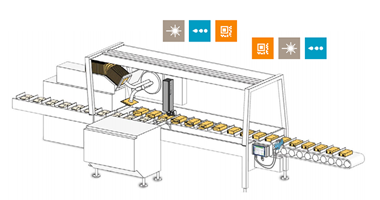
    Equipment that forms, fills, and seals cartons, automating the packaging process for boxed products.

  • CO₂ Laser Engraving

    Engraving technology using a CO₂ laser to permanently mark surfaces, suitable for glass, wood, and some plastics.

  • Conveyor Belt

    A continuous belt used to transport products through various stages of production, packaging, or inspection.

D

  • Date Coders

    Machines that print production or expiration dates on products, critical for compliance and consumer information.

  • Direct Part Marking

    A method for marking products directly with traceable codes, often on durable goods, for lifetime tracking.

E

  • Expiry Date

    The last date on which a product is safe or effective to use, essential for food, pharmaceuticals, and perishable goods.

  • Extruder Machines

    Equipment that shapes materials by forcing them through a die, commonly used for plastic, metal, or food production.

  • Extrusion

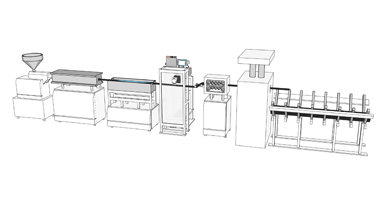
    The process of shaping material through a die to create continuous shapes, used in manufacturing pipes, films, and more.

F

  • FFS Machines

    'Form, Fill, and Seal' machines that create packaging from flat materials, fill it with product, and seal it in one process.

  • Fiber laser engraving

    A method using fiber lasers to create high-resolution, durable marks on hard materials like metals and plastics.

  • Filling lines

    Production lines dedicated to filling containers with products. Often found in food, beverage, and personal care industries.

  • Film Packaging

    Packaging solution using thin plastic films to wrap or contain products, commonly used for food and consumer goods.

  • Flexible Product Packaging

    Packaging made from flexible materials that can change shape, suitable for products like snacks and liquids.

  • Flow Wrap Machine

    Machinery that wraps products in a continuous roll of film, sealing them in single-serving packages or retail-ready packs.

  • Food Grade Labels

    Labels made with safe, FDA-compliant materials suitable for direct contact with food products.

  • Food Packaging

    Packaging designed specifically for food products to ensure safety, freshness, and compliance with regulations.

  • Forming Machines

    Equipment that shapes raw materials into specific forms, essential in various packaging and manufacturing applications.

G

No glossary terms available.

H

  • Hot Stamping Machines

    Machines that apply foil or other markings to packaging using heat and pressure, creating decorative or functional labels.

I

  • Industrial Labeling Machine

    Heavy-duty equipment designed for applying labels in industrial production settings, often used in large-scale packaging.

  • Inkjet Printing Systems

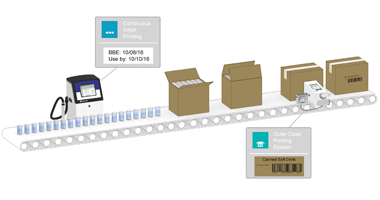
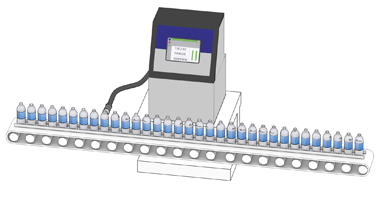
    Printing systems that use inkjet technology to apply information directly onto products or packaging with high speed and flexibility.

J

No glossary terms available.

K

No glossary terms available.

L

  • Labeling Systems

    Integrated systems that apply labels to products or packaging, often including print-and-apply and pre-printed label applications.

  • Large Character Markers (LCM)

    Industrial printing solutions designed to apply bold, easy-to-read markings on large surfaces or materials. These systems are commonly used for coding on secondary packaging like corruagte boxes.

  • Laser Engraver Machine

    Equipment that uses lasers to etch or engrave permanent marks onto surfaces, suitable for detailed and durable markings.

  • Laser Etching Machine

    A machine that uses a laser to create shallow, precise markings on materials, often for codes or traceability.

  • Lot Number

    An identifier given to a specific batch of products, aiding in traceability and quality control within manufacturing.

  • Laser Marking Machines

    For production line product marking, laser marking systems use focused beams of light to create permanent marks on a wide range of materials, including metals, plastics, and glass. Common applications include engraving serial numbers, barcodes, logos, and traceability codes. Read The Comprehensive Guide to Choosing a Laser Marking System.

M

N

  • Nutritional Table

    Information table on packaging that details the nutritional content of food products, required in many regions.

O

No glossary terms available.

P

  • Packaging Lines

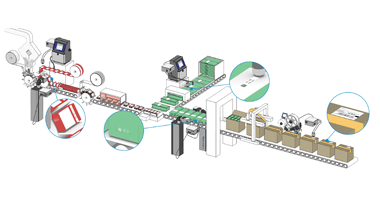
    Automated production lines where products are packed into their final containers, sealed, and prepared for distribution.

  • Pallet Labeling

    The process of applying labels to pallets of products, often to support inventory management and logistics tracking.

  • Plastic Packaging

    Packaging made of plastic materials, used for durability and product protection across many industries.

  • Pre Packaging

    The preparation of products in packaging prior to final handling, distribution, or sale.

  • Pressure Sensitive Labels

    Labels with an adhesive backing that sticks when pressure is applied, requiring no heat or solvents.

  • Product Coding

    Applying unique codes to products to support tracking, traceability, and quality control in the production process.

  • Product Labeling

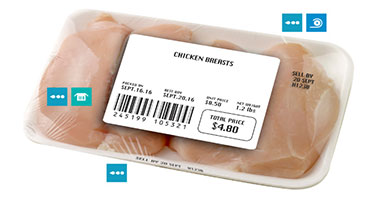
    The act of applying labels to products, providing consumers with brand, ingredient, and regulatory information.

  • Product Traceability

    The ability to track the origin, location, and movement of products through a supply chain, crucial for quality control.

  • Product Tracking

    Monitoring the location and movement of products in a production or distribution network, aiding in logistics and quality assurance.

  • Product Tracking Traceability

    Combining tracking and traceability to provide comprehensive oversight of a product's life cycle and quality history.

  • Production Lines

    The sequence of machinery and equipment used in manufacturing to produce, package, and prepare products for distribution.

  • Products Packaged In Fillers

    Items that are packaged using filler machines, which automatically dispense and contain products like liquids or powders.

Q

No glossary terms available.

R

No glossary terms available.

S

T

  • Thermoforming Machines

    Equipment that uses heat to mold plastic into specific shapes, commonly for packaging trays, lids, and containers.

  • Tubular Bag

    A packaging type that encloses products in a tubular shape, typically sealed at both ends, used for a variety of goods.

U

  • Unique Device Identification (UDI)

    A unique identifier for medical devices, combining static product details with dynamic production data like batch numbers or expiration dates. It must appear on the product in both plain text and a machine-readable format, typically using codes like DataMatrix, GS1-128, or Code 128.

V

  • Vacuum Packaging Machines

    Machines that remove air from packaging and then seal it, extending the shelf life of perishable goods.

  • Vacuum Sealer

    A machine that vacuums out air before sealing packaging, often used to preserve freshness in food packaging.

  • Vacuum Sealers

    Multiple vacuum-sealing machines, typically used in food and industrial packaging, to prevent spoilage and protect products.

  • Vacuum Wrappers

    Machines that vacuum-pack and wrap products, combining air removal with protective outer packaging.

  • Vacuum Packaging Machines

    Printing technology that allows for unique, variable information on each item, such as serial numbers or barcodes.

W

  • Wraparound Labels

    Labels that fully wrap around a product or container, commonly used for bottles and cylindrical packaging for 360° branding.

X

No glossary terms available.

Y

No glossary terms available.

Z

No glossary terms available.