
Understanding GS1 Sunrise 2027 and 2D codes

What is GS1 Sunrise 2027?
GS1 Sunrise 2027 is an industry initiative intended to help enable retail point-of-sale (PoS) systems to scan and process 2D barcodes in addition to or instead of traditional EAN/UPC barcodes. Both QR codes powered by GS1 Digital Link and DataMatrix codes can carry more information than linear barcodes while supporting product identification, consumer engagement, aspects of regulatory compliance, and retail scanning. The initiative represents an important evolution in barcode technology.
Today, EAN/UPC barcodes remain the primary identifier used at retail checkout. Under GS1 Sunrise 2027, manufacturers are evaluating how 2D codes may complement existing barcode systems and support future business needs. Rather than a single change taking place on a specific date, Sunrise 2027 is an ongoing industry effort involving retailers, brands, manufacturers, technology providers, and standards manufacturers.
Additional resource: For details on the GS1 Sunrise 2027 initiative and industry adoption guidance, visit the GS1 Sunrise 2027 Overview.
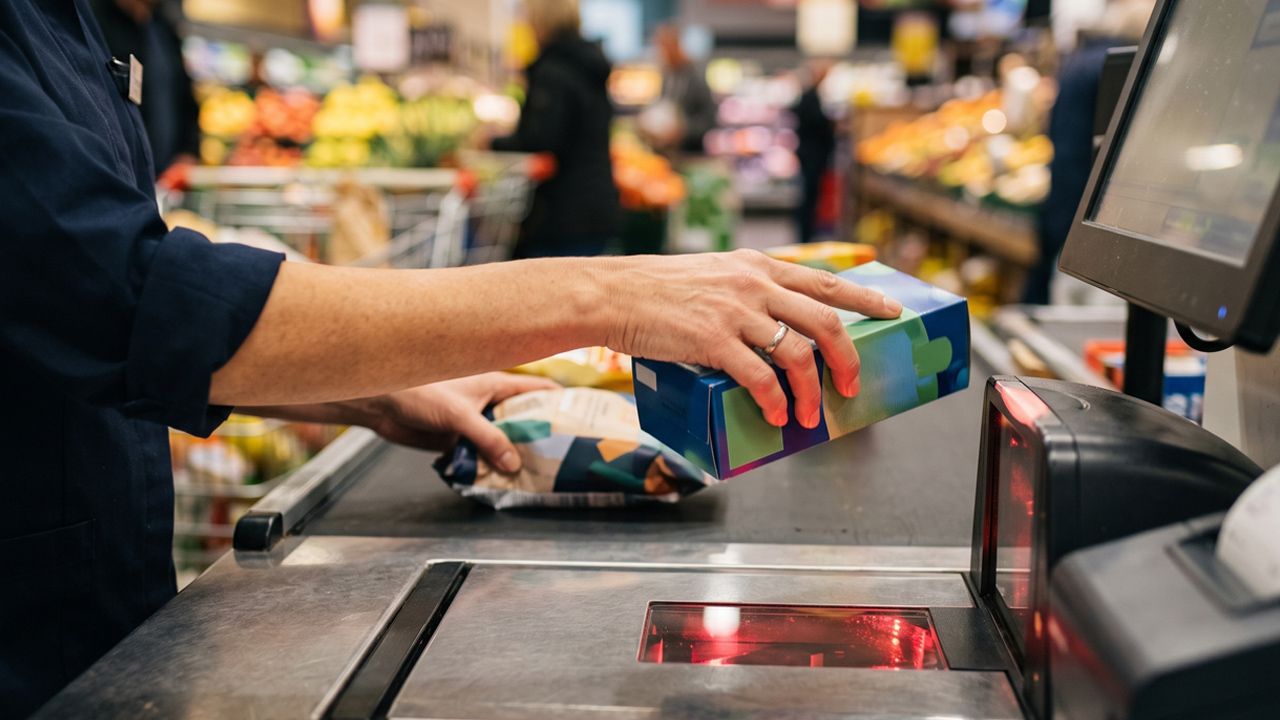
2D codes and existing EAN/UPC barcodes
For many brands and manufacturers, adoption of 2D codes does not mean immediately removing existing EAN/UPC barcodes. Packaging may contain both a traditional barcode and a 2D barcode while retailers, manufacturers, and supply chain partners continue implementing support for newer technologies.
This approach can help manufacturers:
- Maintain compatibility with existing systems
- Support retail scanning requirements
- Introduce new capabilities incrementally
- Reduce operational disruption
- Evaluate performance before broader implementation
Planning for coexistence between barcode formats is an important consideration for many Sunrise 2027 initiatives.

Boost your coding efficiency with proven solutions
This article covers one aspect of GS1 Sunrise 2027. Visit our main guide for an overview of 2D barcode adoption, implementation considerations, retail readiness, and practical resources for brands and manufacturers.
Continue your GS1 Sunrise 2027 journey
Explore related resources to deepen your understanding of 2D barcodes, GS1 standards, and implementation best practices.

GS1 Digital Link and 2D code implementation
Explore GS1 Digital Link, Application Identifiers, data structure, QR code design considerations, printing approaches, and validation practices that support successful 2D barcode implementation.
*GS1 and the GS1 logo are registered trademarks of GS1 AISBL.
**QR Code is a registered trademark of DENSO WAVE INCORPORATED.


